
Removal and clean changeover
We disconnect the old heater, drain it, and remove it from the property. The new installation starts with a stable base, correct orientation, and a layout that leaves access to service points.
Serving San Jose, California & surrounding areas
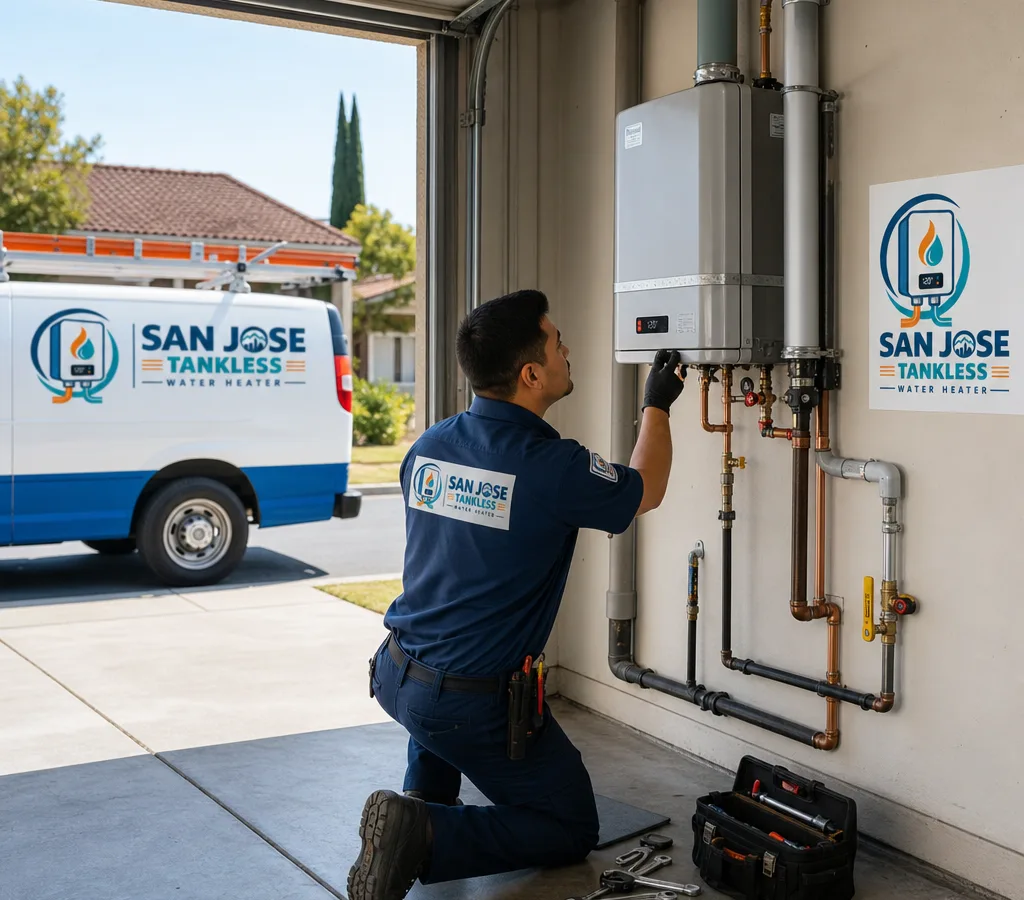
Water heater replacement in San Jose
Get reliable hot water again with a clean, code-aware replacement. We handle removal, installation, start-up, and safety checks so the new unit runs the way it should.
Scope and homeowner fit
If you are searching for water heater replacement San Jose, you are usually dealing with one of two problems: the heater is leaking or it is failing to keep up with daily use. A proper replacement is more than swapping a tank. The new heater has to match your home's demand, fuel type, venting path, and available space, then it has to be set up to meet California safety and seismic expectations.
San Jose Tankless Water Heater replaces failed and aging water heaters for homeowners who want dependable hot water, clear options, and workmanship that holds up over time. We remove the old unit, install the new one, connect water and gas or electrical, verify venting and combustion air where applicable, then test for safe operation. If you are deciding between a standard tank and a tankless upgrade, we will walk you through what changes in your home, not just what changes on the box.
San Jose housing is a mix. In older areas like Willow Glen, water heaters are often in tight garages or utility closets where venting and clearances matter. In Downtown and North San Jose, condos and newer builds may have limited mechanical space, HOA requirements, or electric-only configurations. In Evergreen and Almaden Valley, larger households often notice recovery and capacity issues first, which can change sizing and the best equipment choice. Wherever you are, the goal is the same: a replacement that is sized correctly, installed safely, and verified before we leave.
What the work includes
We disconnect the old heater, drain it, and remove it from the property. The new installation starts with a stable base, correct orientation, and a layout that leaves access to service points.
We confirm whether your setup is gas or electric, check available venting or electrical capacity, and size the replacement to the number of fixtures and typical simultaneous use in your home.
After connection, we test water lines for leaks, verify shutoffs, and check safe operation. For gas units, we confirm proper ignition and vent performance based on the equipment type.
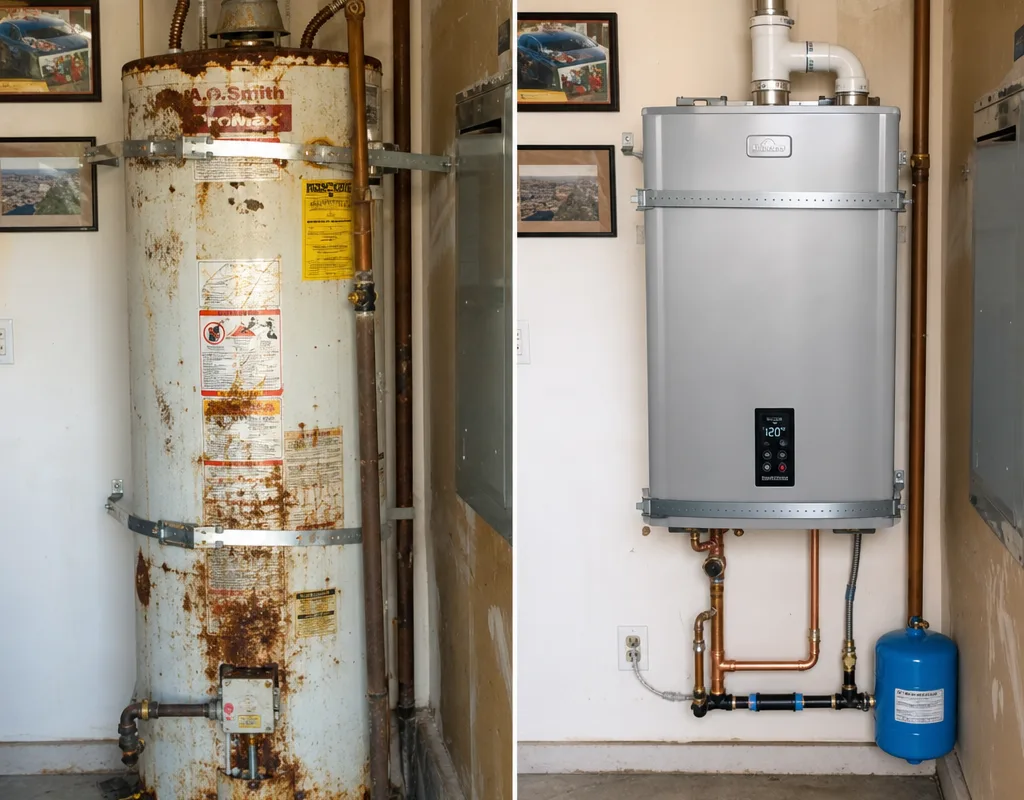
If the home has a pressure regulator or closed system, we account for thermal expansion needs so the system behaves correctly as water heats up.
San Jose is in an active seismic region, so stability matters. We secure the heater appropriately for the installation location and configuration.
We explain what changes with a tankless upgrade—gas line sizing, venting route, condensate handling for condensing models, and maintenance expectations—so you can decide with confidence.
Service details and options
A standard tank replacement is usually the fastest path back to hot water when you want a like-for-like swap and your existing venting and hookups are in good shape. The key decisions are capacity (gallons), fuel type (gas or electric), and recovery needs. A tank that is too small feels like a hot water shortage. A tank that is oversized can waste space and can cycle differently than you expect.
A tankless replacement or upgrade makes sense when you want longer continuous hot water, you have space constraints, or you are planning for higher demand. It is not always a simple drop-in, especially for gas. Many tankless installs require attention to gas supply sizing, a new vent type or route, and a condensate drain if you choose a high-efficiency condensing unit. In condo or townhouse settings around Downtown San Jose, the feasible venting path and HOA requirements can drive the decision as much as performance.
If you want a broader look at options across the city, our water heater services in San Jose cover common configurations and what to expect when your home's setup does not match a typical replacement.
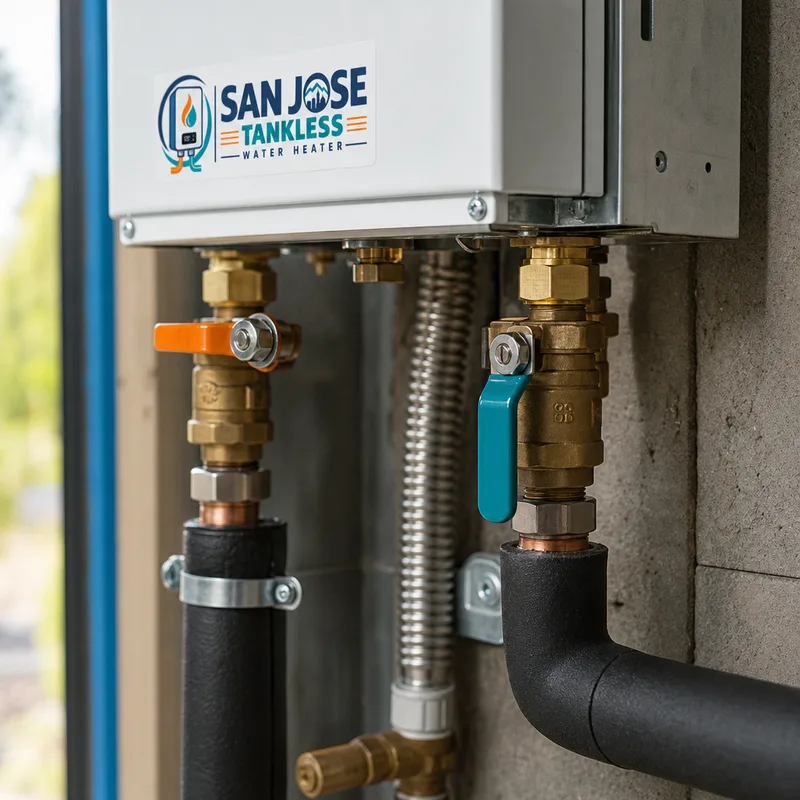
No matter which route you choose, we focus on the practical details that prevent nuisance shutdowns and premature failure: correct water isolation, clean connections, proper venting, and a final commissioning check before the job is considered complete.
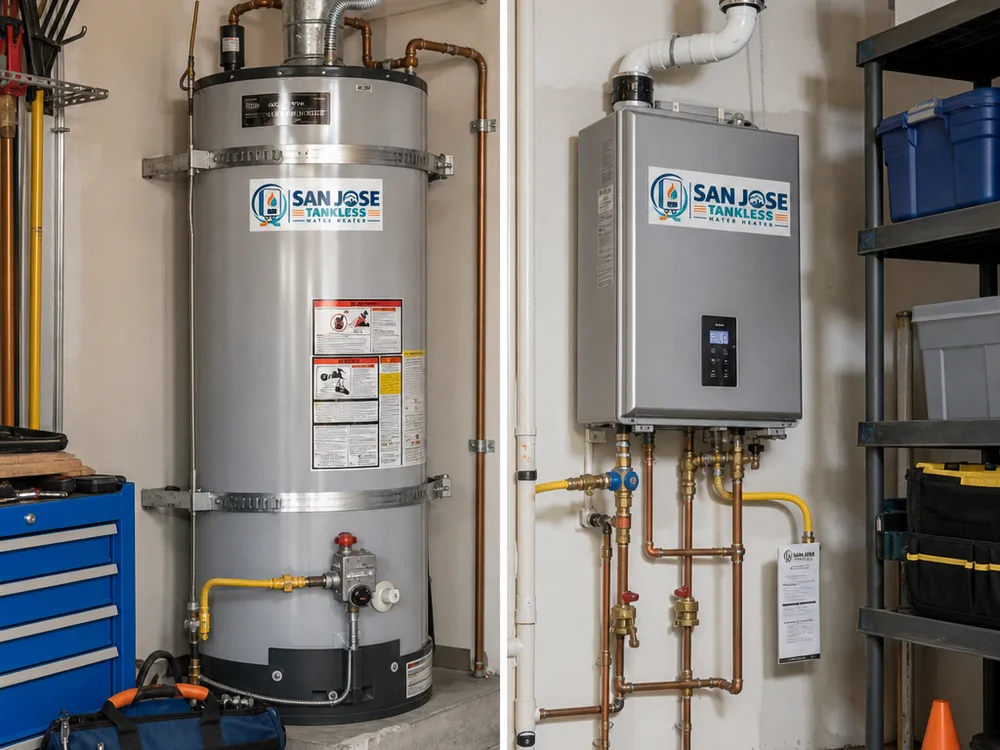
Assessment and installation process
We confirm fuel type, location, venting style, shutoff accessibility, and the condition of nearby piping and valves. We also note space constraints common in garages and closet installs.
We size the unit based on household demand and your goals, including fast recovery, continuous hot water, or space savings. For tankless systems, we discuss venting, gas-line requirements, and condensate needs.
We safely shut down and disconnect the old unit, drain as needed, and remove it from the property so the area is ready for a clean installation.
We set the new unit, make water and gas or electrical connections, address expansion considerations where applicable, and secure the heater for stability in a seismic region.
We bring the system online, check for leaks, verify temperature and safe operation, and show you the shutoffs and maintenance points so you are not guessing later.
Planning your replacement budget
Water heater replacement in San Jose typically ranges from about $1,800 to $4,500 for a standard tank swap, while tankless replacements or upgrades often run about $3,500 to $8,500+ depending on venting, gas line work, and the unit selected.
Your final price depends on fuel type (gas vs electric), capacity, venting changes, access (garage vs closet), code-related updates (valves, expansion control, strapping), and whether piping needs repair or resizing. Exact cost is confirmed after an on-site assessment of the existing heater and connections.
Installation workmanship
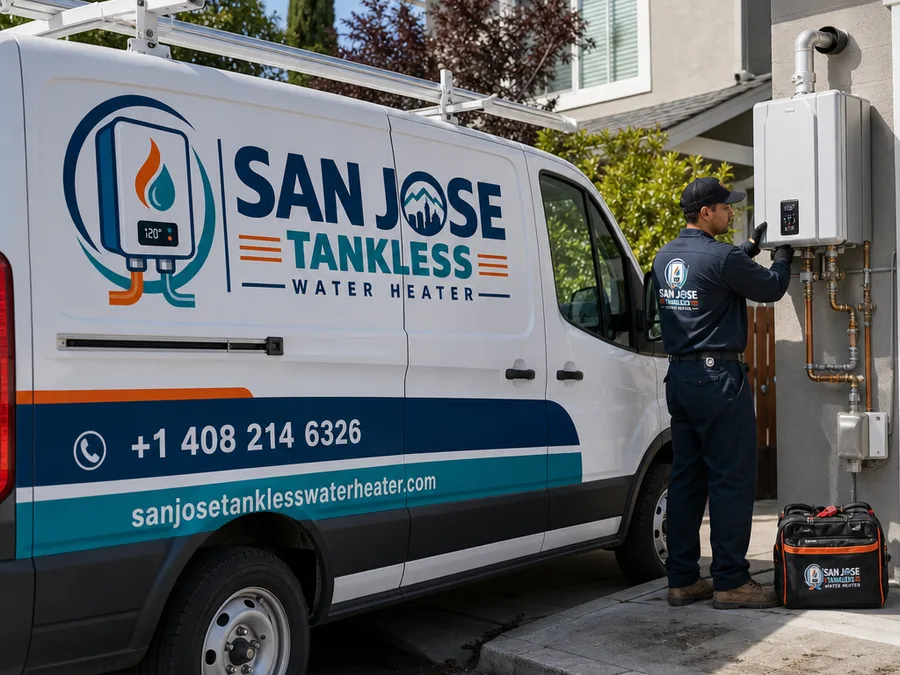
Practical answers before service
A straightforward tank swap is often completed the same day, while a tankless replacement or upgrade can take longer if venting, condensate draining, or gas line resizing is needed. The biggest time factors are access (tight closets take longer), whether shutoff valves are functional, and whether the installation needs additional safety or code-related updates.
Many water heater replacements require a permit and inspection, especially when gas appliances, venting, or location changes are involved. Requirements can vary by project details, so we review the scope with you and plan the replacement so it can pass inspection with the correct equipment and installation approach.
Yes, a leaking water heater is usually time-sensitive because the leak can worsen and can damage walls, flooring, or nearby stored items, especially in garages and utility closets. If the tank itself is leaking, repair is rarely a lasting fix; replacement is typically the practical solution after the setup is assessed.
Sometimes, but it depends on what your home already has available at the installation location. Switching fuels can require new venting, gas piping, electrical changes, and possibly circuit upgrades, which affects feasibility and cost. We can outline what would have to change after checking the current connections and space.
The most common issues are venting limitations, undersized gas supply, and planning for condensate drainage on condensing units. In some San Jose homes, the shortest vent route may require a different placement than the old tank, and that layout detail often drives the final plan.
Clear a path to the water heater and remove stored items from the immediate area so we can work safely around gas, water, and electrical connections. If the heater is in a closet, clearing the doorway and providing access to the main water shutoff helps the replacement move faster.
Ready for a clear next step?
Tell us what is happening with your current heater—no hot water, a leaking tank, pilot issues, or an upgrade request. We will confirm the safest replacement plan for your San Jose home and provide a clear, written scope before any work starts.